

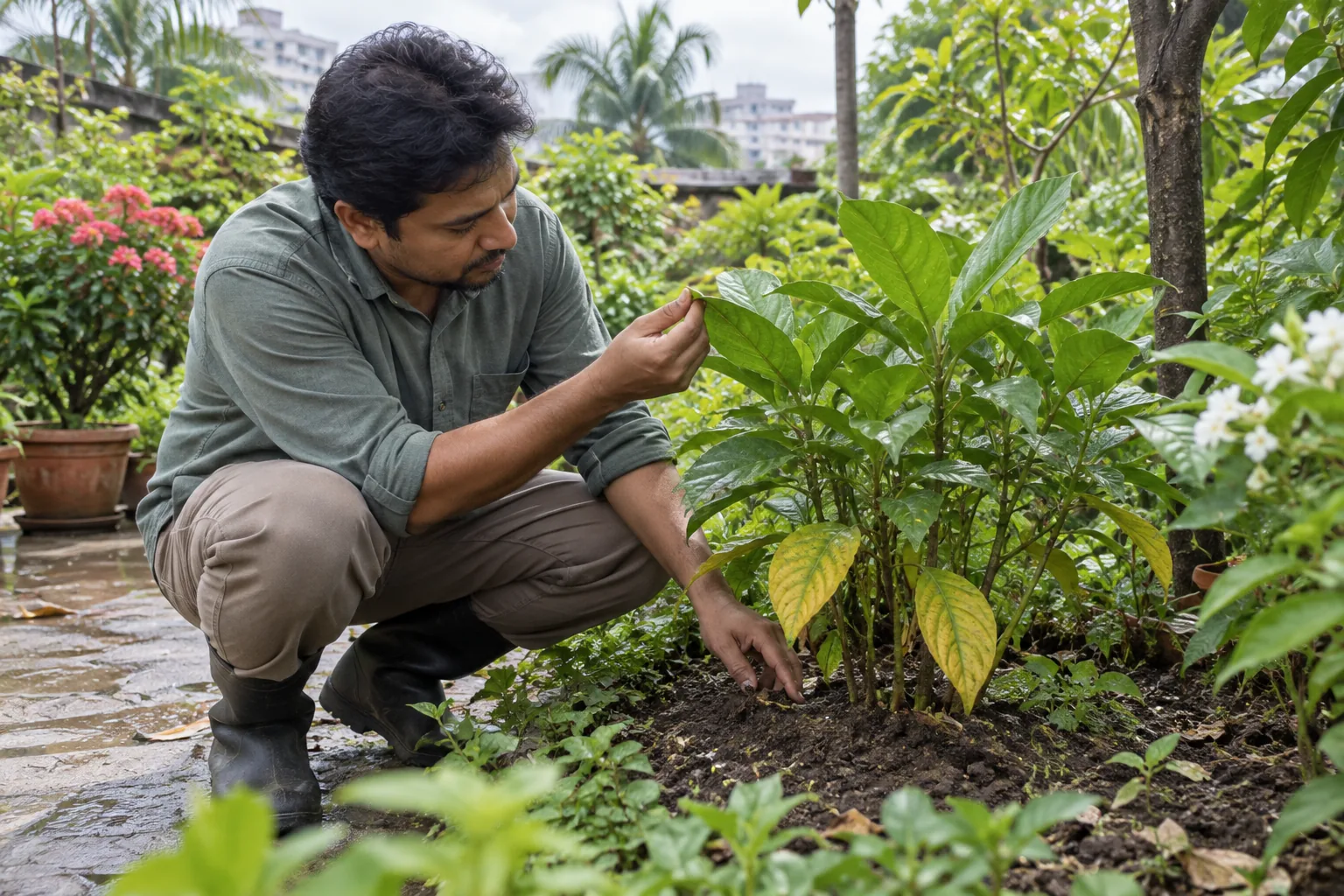
Why Your Garden Plants Are Dying: Common Problems and Solutions
When garden plants start wilting, yellowing or dropping leaves, it is tempting to reach for more water or fertilizer. But the same symptom can have several causes. In Dhaka, heat, heavy rain, humid weather, pot drainage and changing sunlight can all affect plants. A little checking before treatment helps avoid making the problem worse and can show when a plant care service in Dhaka would be useful.
Start by looking at the whole plant and its growing conditions: feel the soil, check whether water can drain away, notice how much sun it receives and inspect both sides of the leaves. Change one care factor at a time where possible, then observe how the plant responds.
Read the symptoms before choosing a solution
Yellow leaves, drooping stems, brown edges and slow growth are clues, not diagnoses. A few older leaves may naturally turn yellow, while widespread changes or damage on new growth deserve closer attention. Check whether the problem is affecting one plant or several nearby plants; a pattern can point to a shared issue such as watering, drainage, heat or pests.
Look at the stems, leaf undersides and soil surface. Note when symptoms began and whether they followed repotting, pruning, fertilizer, a heat spell or heavy rain. These details are more useful than treating a symptom in isolation.
Check watering and soil moisture
Both too much and too little water can make plants wilt. Before watering, feel the soil a short distance below the surface rather than relying only on how dry the top looks. A pot that feels unusually heavy and stays wet may be holding too much water; very dry soil that has pulled from the pot edges may need a slow, thorough watering.
Watering needs vary by plant, pot size, soil mix, sunlight and weather, so a fixed daily schedule can be unreliable. In hot weather a small container may dry quickly, while after several rainy days the same plant may need no extra water. Water the root zone as appropriate for the species, and empty saucers that keep roots standing in water.
Improve drainage and protect the roots
In the rainy season, containers and low garden beds can remain saturated. Check that pots have open drainage holes and that water is not trapped in decorative outer pots. In garden beds, notice whether puddles remain after rain or soil feels waterlogged for a long time. Compacted soil and blocked outlets can keep roots short of air and contribute to decline.
If a plant remains limp while the soil is very wet, adding more water is unlikely to help. Avoid repeatedly disturbing the roots to check them. For a valuable or badly declining plant, ask an experienced gardener to inspect the root area and growing medium before repotting or cutting roots.
Match sunlight and heat to the plant
A plant that used to thrive may struggle after a change in shade, a new wall or roof reflection, or a move to a hotter spot. Scorched patches on exposed leaves can be a sign of intense direct sun or heat stress, while weak, stretched growth may indicate insufficient light. Compare the plant's needs with the actual light it receives through the day.
Make changes gradually where practical. Moving a shade-loving plant into strong midday sun can shock it; shifting it to a more suitable position or using light shade during extreme heat may help. Also check whether air-conditioning exhaust, hot paving or a reflective surface is creating a concentrated heat source.
Inspect leaves for pests and disease
Check leaf undersides, tender new growth and stems for visible insects, webbing, sticky residue, holes or spreading spots. Isolated damaged leaves do not always mean a serious infestation. If you find a pest, identify it before choosing a control method; indiscriminate pesticide use can harm beneficial insects, people, pets and the plant itself.
Remove fallen or clearly affected plant material when appropriate, clean tools between plants, and avoid wetting foliage late in the day if a plant is prone to leaf problems. If damage is spreading quickly or you cannot identify the cause, ask a knowledgeable plant-care professional to assess it before applying a chemical treatment.
Review soil, nutrients and recent changes
Slow growth or pale leaves can have several causes, including unsuitable soil, root stress, light conditions or nutrient imbalance. More fertilizer is not always the answer: concentrated or frequent feeding can injure roots and worsen a stressed plant. Follow product directions for the plant and growing medium, and avoid fertilizing a severely dry or waterlogged plant until its basic conditions are addressed.
Think back to recent changes such as repotting, a new soil mix, pruning, construction nearby or a different watering routine. If several plants in the same bed are affected, checking the shared soil, drainage and irrigation is often more useful than treating each plant separately.
A simple plant-health check for Dhaka gardens
During hot and rainy periods, inspect container drainage, look for standing water and check soil moisture before adding water. After storms, note broken stems or wind damage. Keep pots where their light needs can be met, and avoid placing water-sensitive plants in spots that stay saturated. A short weekly check can help you notice changes early without overwatering or over-pruning.
For a broader routine, see Baganbari's monthly garden maintenance checklist for homes and offices. Lawn and outdoor-area care is covered in the guide to grass cutting services in Dhaka, and tree care is discussed in the tree trimming and pruning guide for garden owners.
When to ask for professional plant care
Get help if decline continues despite correcting an obvious care issue, several plants are affected at once, pests are spreading, or you are unsure whether to repot, prune or treat. A site visit can help assess sunlight, watering, soil and drainage together instead of guessing from one symptom.
Baganbari Landscaping Ltd. provides garden maintenance in Dhaka, with plant care and other tasks agreed to suit each property. Request a Garden Maintenance site visit and custom quotation to discuss your plants and the support your garden needs.