

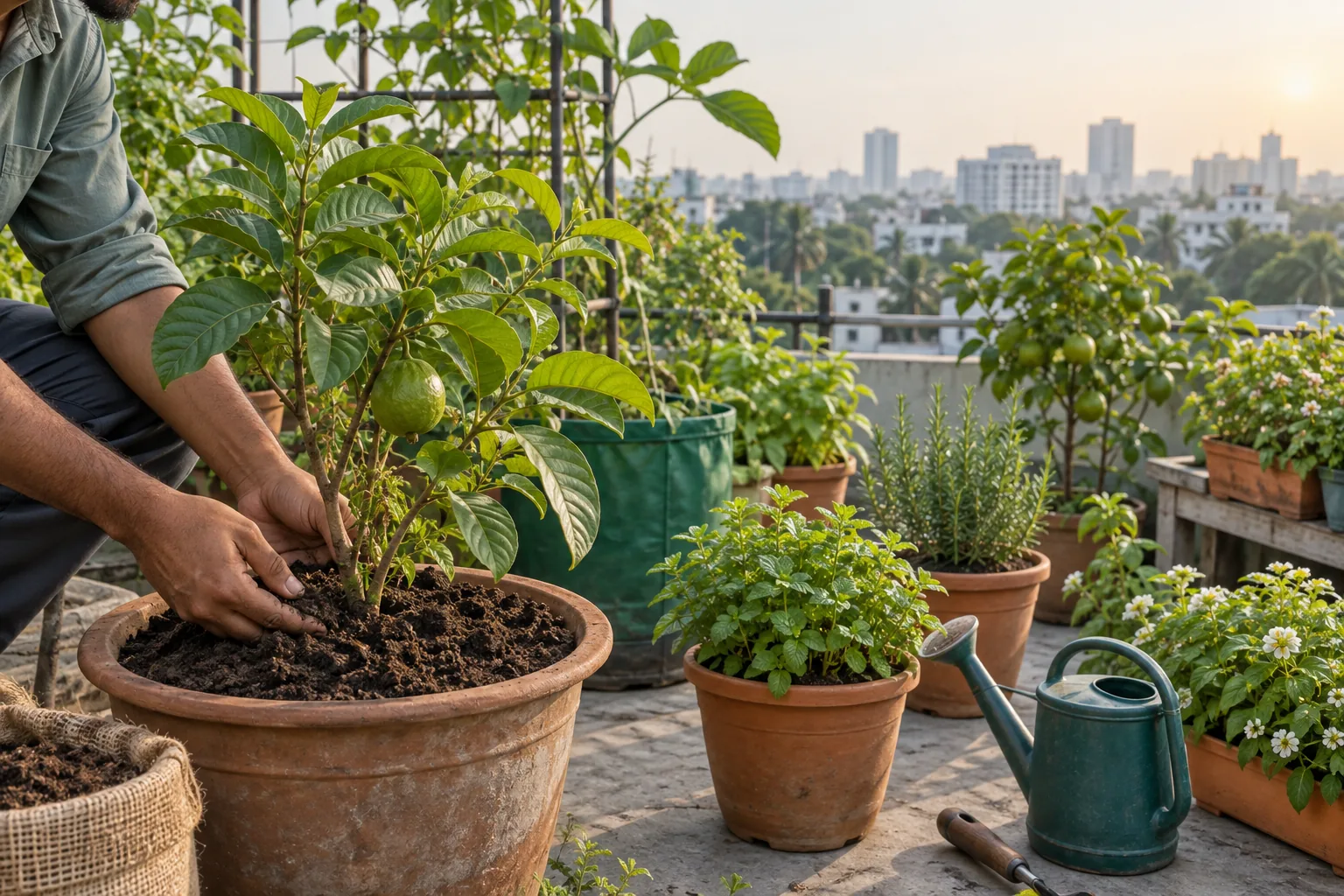
Rooftop Garden Maintenance Guide: Soil, Watering and Sunlight
A healthy rooftop garden is built through small, regular checks—not a rigid watering calendar. Dhaka rooftops can expose containers to intense sun, heat, wind and heavy seasonal rain, so the right routine depends on each plant, pot, growing medium and the conditions on your roof. This rooftop garden maintenance guide covers practical ways to check soil, water thoughtfully, manage sunlight and keep the space tidy and safe.
Start by observing your plants and the roof itself. Wilting, yellow leaves or slow growth can have several causes, including too much or too little water, poor drainage, pests or unsuitable light. Check the growing medium before changing your routine, and make one adjustment at a time.
Check soil moisture before watering
Container plants usually dry faster than plants growing in open ground, especially in small pots or during hot, windy weather. Instead of watering every container automatically at the same time, check the moisture a short distance below the surface. If the root zone is still moist, wait and check again; if it feels dry, water slowly and evenly so moisture reaches the roots.
Watering needs vary with plant species, pot size, growing medium, exposure and the season. A short shower may wet only the top layer, while prolonged monsoon rain can leave some containers saturated. Adjust after checking the pot rather than assuming rainfall has watered every plant. When practical, water in the cooler morning or late afternoon and avoid wasting water through fast runoff.
Keep the growing medium healthy
Use a container medium suited to the plant and the load limits of the building. A rooftop mix needs to support roots while allowing excess water to drain; there is no single recipe that suits every fruit tree, herb, flowering plant and vegetable. Avoid repeatedly compacting the surface. If it has crusted, loosen only the top gently without damaging roots.
As a potting medium settles or loses structure, remove fallen leaves and add an appropriate fresh top layer or compost when the plant needs it. Do not replace all the medium or apply fertilizer just because a plant looks stressed: first check moisture, drainage, light and signs of pests. Follow the product label and the needs of the species when feeding.
Before adding large planters, deep growing beds, water storage or a substantial volume of wet medium, confirm the roof’s safe capacity with a qualified structural professional. Wet materials are heavier than dry ones, and a visual estimate is not a substitute for a building-specific assessment.
Match sunlight to the plant
Sun exposure can differ across one rooftop. Observe where direct sunlight falls at different times of day and note which areas become especially hot or windy. Place sun-loving plants where they receive the light they need, and use suitable shade or a more protected position for plants that scorch or wilt in intense afternoon sun.
Rotate movable pots gradually if one side receives much more light, and avoid making sudden changes that expose shade-acclimated plants to strong sun. If you are still selecting plants, compare your roof’s actual conditions with our guide to the best plants for rooftop gardens in Bangladesh.
Make drainage part of routine care
Check that each container’s drainage holes are open and that water can escape without damaging the roof or creating a nuisance below. Do not allow pots to remain in standing water. After heavy rain, look for water collecting in containers, blocked outlets, displaced pots or plant debris near roof drains. Keep roof drainage paths clear, but do not alter waterproofing, roof outlets or fixed drainage components yourself.
Persistent ponding, damp marks indoors or a leak should be assessed by the building’s maintenance team or a qualified waterproofing professional. For a broader pre-installation checklist, see our guide to rooftop garden waterproofing and drainage.
Use a simple seasonal maintenance routine
- During hot, dry spells: check pots more often, especially small containers and newly planted crops. Provide appropriate shade where needed and inspect irrigation lines for leaks or blocked emitters.
- Before and after heavy rain: clear loose leaves away from drainage paths, check that pots are stable and look for waterlogging or runoff problems.
- After strong winds: inspect supports, stakes and tall plants; remove broken branches and reposition only stable, manageable containers.
- Regularly: remove dead leaves, look under foliage for pest activity, prune only as appropriate for the plant and keep paths and access points unobstructed.
For larger gardens or automated irrigation, have the system checked periodically and tailor the frequency to the site. The Singapore National Parks Board’s technical guidance treats irrigation, drainage, vegetation and rooftop safety as parts of an overall maintenance plan; a Dhaka roof still needs care suited to its own plants, weather and building.
Keep rooftop care safe
Use stable access, keep away from unprotected edges and avoid carrying loads that make walking unsafe. Do not climb on parapets or lean over edges to reach plants. Secure tall plants and loose items against wind, and ask an electrician to assess outdoor electrical equipment or irrigation controls. If maintenance requires work near an edge, at height, or on fixed roof systems, use trained professionals.
Plan a garden that is easier to maintain
Choose containers and plants that suit your available time, water access and sunlight. Leave space to reach each pot and clean the floor, and group plants with similar care needs where practical. Our small rooftop garden ideas for Dhaka homes can help with layout, while the rooftop garden cost guide covers budget planning.
For tailored planting, layout and ongoing care, explore Baganbari’s Rooftop Gardening service in Dhaka. A site-specific plan can make routine upkeep more manageable while keeping structural, waterproofing and drainage questions with the appropriate building professionals.
Further reading
For general container and roof-garden advice, read the RHS guide to roof gardens and balconies and RHS container-watering guidance. The Singapore National Parks Board rooftop greenery publications cover maintenance, irrigation, drainage, substrates and design loads. These are general references; follow local requirements and advice for your own building.