

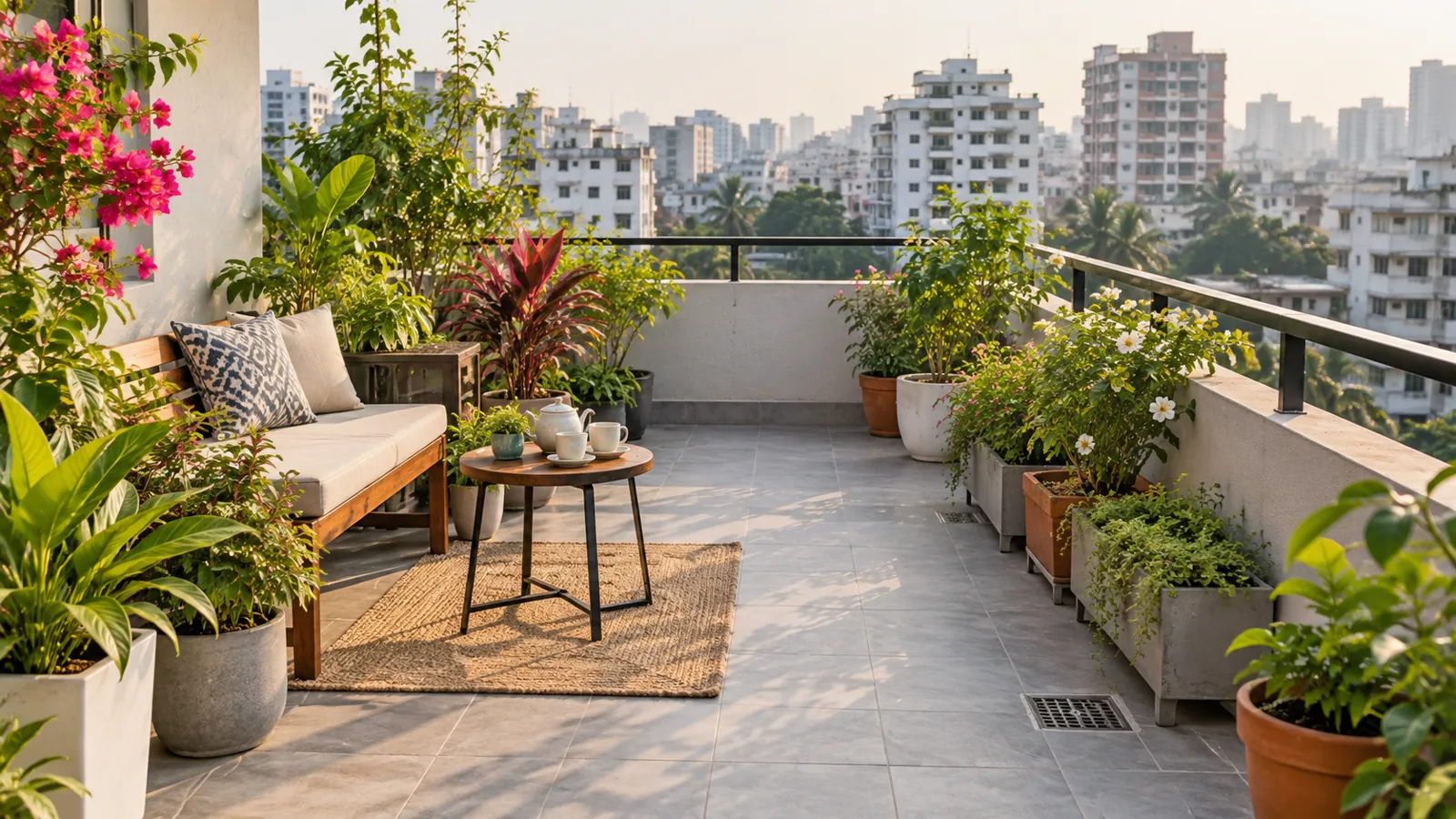
Small Rooftop Garden Ideas for Dhaka Homes
A small roof can still become a useful green space when every area has a purpose. For Dhaka homeowners looking for small rooftop garden ideas, start with how you want to use the roof: a quiet tea corner, a few herbs, a family seating area or a mix of plants and open space. A simple layout is often easier to care for than filling every corner with pots.
Before buying planters or adding built-in features, check the building's roof-use rules, existing waterproofing and load limits. Wet growing medium, containers, people and furniture all contribute to the proposed use, so get the roof assessed by a qualified structural professional before adding significant weight.
1. Plan a clear route before placing plants
Sketch the roof and mark doors, stairs, parapets, drains, utility equipment and the places where people need to walk. Keep access and exits clear, and leave roof drains and inspection points reachable for cleaning. Grouping the garden along one side can preserve a comfortable open route through a compact space.
Do not block safety barriers or place containers where they encourage someone to climb over a parapet. Any built-in bench, screen or planter that needs fixing should be designed and installed without compromising the roof membrane or other building components.
2. Choose one main purpose for the rooftop
Give the roof a clear focal point: a small table for morning tea, a compact bench, a herb corner or a leafy view from the doorway. On a narrow roof, one well-positioned seating spot can work better than several separate furniture pieces. Choose movable furnishings only if they can be used and secured safely in the site's wind conditions.
If you want several uses, define modest zones with planters rather than constructing tall partitions. Keep a visible pathway between them so watering, cleaning and maintenance remain practical.
3. Use containers to create height and depth
Combine a few different container heights to make the garden feel layered without crowding the floor. Place lower pots where they will not hide drains or obstruct the walkway, and use taller plants only where their mature size, wind exposure and support needs have been considered. A coordinated group of containers can feel calmer than many unrelated small pots scattered across the roof.
Container material and size affect weight, but the full load also includes wet growing medium, retained water and the mature plants. Lightweight-looking pots do not by themselves prove that a roof can support a layout. Ask a qualified professional before adding large containers, raised beds or water features.
4. Select plants for the roof's sun, wind and care routine
Observe how sunlight moves across the roof before choosing plants. Rooftop locations can be hotter, sunnier and windier than a ground-level garden, while a nearby wall can create shade in part of the day. Choose plants to suit those actual conditions and the amount of care you can provide; Dhaka's rain and heat can also change watering needs through the year.
Use the guide to the best plants for rooftop gardens in Bangladesh for a starting point, then check each plant's mature size, water requirements and suitability for the specific roof. Keep taller or top-heavy plants away from exposed edges unless their placement and stability have been professionally planned.
5. Add shade without closing in the roof
A small shaded corner can make a rooftop more comfortable during hot hours. Consider existing shade first, then discuss any canopy, pergola or screen with the building owner and a qualified designer. New structures can affect wind forces, roof loading, access and waterproofing, so avoid drilling or anchoring through the roof surface without an approved detail.
Keep any screen or shade element from interfering with parapets, guardrails, drains, doors or maintenance access. In a compact layout, lighter visual boundaries such as grouped planters may define a space without creating a solid wind-catching wall.
6. Make watering and drainage easy to manage
Place containers where they can be watered without leaving hoses across the main route. Use suitable pots with drainage provisions, and arrange them so overflow does not run toward doorways or collect around roof outlets. Check the roof's drainage plan before selecting trays, irrigation or planter positions; a decorative tray should not become a hidden pool of standing water.
For a new roof-garden build, review the rooftop garden waterproofing and drainage checklist before installation. Keep the drain area visible and maintain access for routine inspection, especially ahead of heavy rain.
7. Keep the design simple to maintain
Choose a manageable number of plants and repeat a few shapes or colors to make the space feel intentional. Leave room to reach each container, remove fallen leaves and clean the floor. Keep lightweight accessories and loose materials under control during windy weather, and plan how green waste will be carried down safely.
For budgeting and layout considerations, read the rooftop garden design cost guide for Bangladesh. If you are comparing a layout for your own property, Baganbari's Rooftop Gardening service in Dhaka can help you discuss plants, space planning and ongoing care. Request a site visit and custom quotation; structural, waterproofing and fixed-installation work should be reviewed by the appropriate building professionals.
Technical references before you build
General inspiration is not a roof-specific design. The RHS roof-garden guide recommends checking structural suitability, while the Singapore National Parks Board provides technical rooftop greenery guidance on design, planting, safety and maintenance. For a Dhaka property, use applicable Bangladesh National Building Code materials from HBRI and get project-specific advice from qualified professionals.