

Rooftop Garden Waterproofing and Drainage Checklist
A rooftop garden needs more than healthy plants: the roof below it must be protected and excess water must have a clear route to the outlets. If you are planning rooftop garden waterproofing in Dhaka, use this checklist to prepare the right questions for your building and garden professionals. It is an inspection guide, not a do-it-yourself waterproofing specification; the correct system depends on the roof, existing construction and product requirements.
Before adding soil, planters or irrigation, confirm that the roof can safely support the proposed garden and that the waterproofing and drainage details are suitable. If there are existing leaks or damp patches below, have them assessed before covering the roof with a garden build-up.
1. Check the roof before planning the garden
Record the roof's age if known, prior repairs, current leaks, visible ponding, drain locations and any cracks or movement around edges and service penetrations. Note ceiling stains or dampness in rooms below; these can have more than one cause, so arrange an inspection rather than assuming the source.
Ask a qualified structural professional to review the proposed loading before installing soil, large planters, water features, storage or other heavy items. Wet growing medium and stored water weigh more than dry materials. Do not estimate a safe load from appearance or from another building's roof.
2. Confirm the waterproofing system is suitable
Ask the building owner, designer or installer for available drawings, product information, repair records and warranty terms. The waterproofing product and details should be appropriate for the intended roof-garden use and compatible with the rest of the roof assembly. Depending on the system, root resistance or a separate root barrier may be required; a landscape layer should not be treated as a substitute for a suitable waterproofing design.
Have the membrane, edges, joints, upstands and places where pipes or other services pass through the roof inspected by the responsible specialist. Agree on the appropriate inspection or integrity test before the system is covered. The test method and acceptance criteria should be selected by the waterproofing professional and follow the product manufacturer's requirements.
3. Keep drainage outlets visible and serviceable
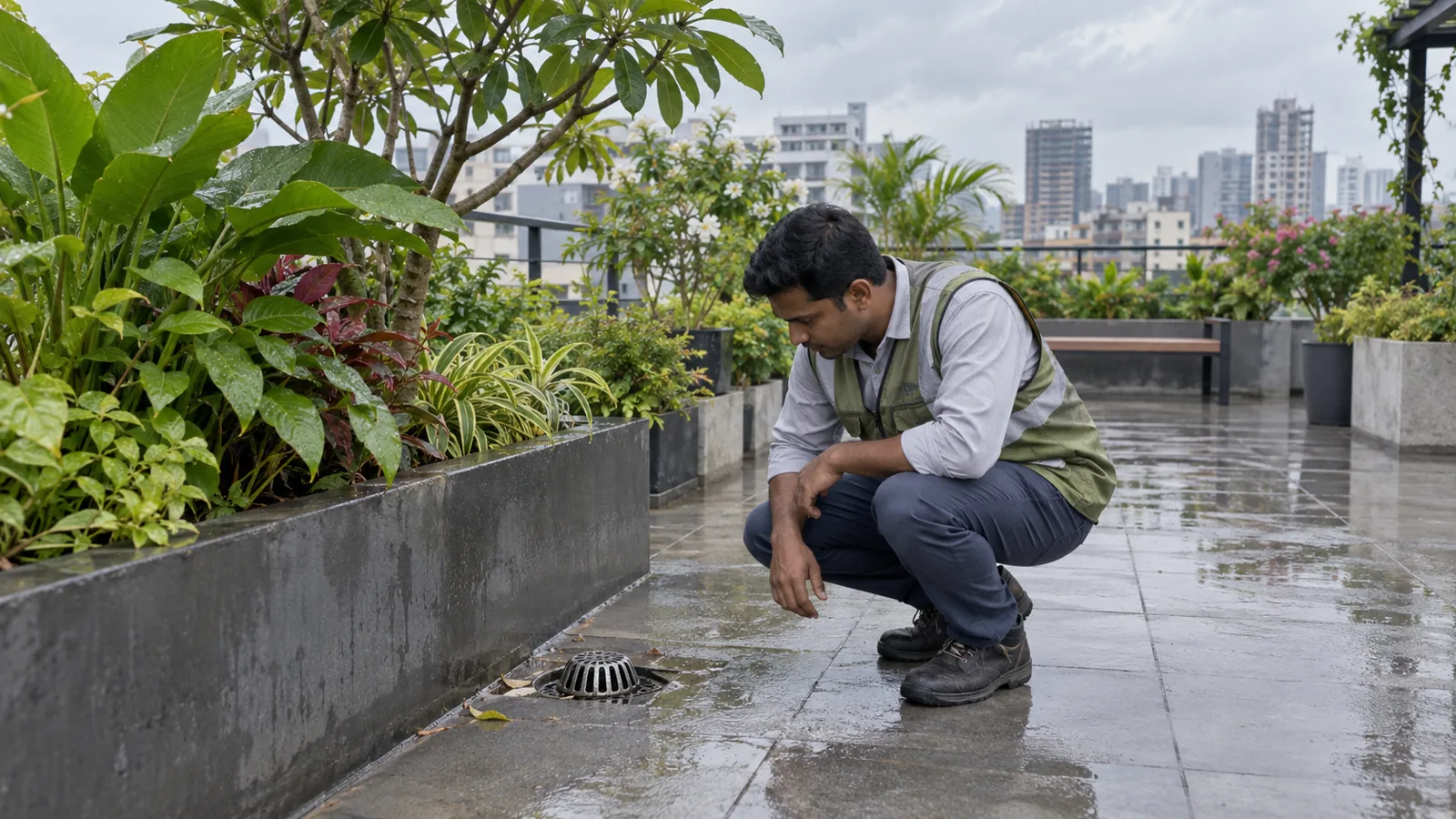
Map roof drains, rainwater outlets and any overflow routes before positioning planters. They should remain reachable for inspection and cleaning after the garden is installed. Planters, gravel and loose growing medium should not block an outlet or redirect water toward a doorway, wall or neighbouring property.
- Check that leaves and loose debris can be removed without dismantling roof components.
- Make sure inspection points and drain covers will remain accessible within the finished layout.
- Ask how the roof's existing falls and drainage paths will be preserved.
- Confirm that any planter drainage or irrigation overflow is directed to an appropriate outlet.
Do not drill, chase or fix new supports through a waterproofed roof unless the approved detail specifically allows it and the waterproofing professional manages the work.
4. Protect the roof while installing planters
Once waterproofing has been inspected, the installer should specify suitable protection and drainage components for the chosen roof system. The full assembly may include waterproofing, root protection, drainage, filter and growing layers, but the exact build-up is not the same for every roof. Follow the design and manufacturer's instructions rather than selecting layers by appearance alone.
During installation, protect the finished membrane from sharp tools, dropped materials, concentrated loads and unnecessary foot traffic. Do not use it as a general storage or work surface. Plan how heavy materials will be moved and where they will be placed, using the structural professional's guidance.
5. Inspect the roof garden through Dhaka's rainy season
Before periods of heavy rain, visually check that drains and inspection points are not covered by leaves or loose material. After rain, look for unusual standing water, slow drainage, displaced planter components or water appearing in the rooms below. A wet roof surface immediately after rainfall does not by itself prove a leak; persistent ponding or new dampness deserves a professional assessment.
Keep a simple maintenance record with dates, photographs of visible changes, drain cleaning and repair details. If a leak is suspected, avoid adding more soil or trying an unapproved coating over the surface. The source may be at a joint, upstand, outlet or another building component, so diagnosis should come before repair.
Warning signs that need professional attention
Arrange an inspection if you notice recurring damp patches or ceiling stains below the roof, water that repeatedly remains around an outlet, damaged flashing or membrane edges, cracks that have changed, or a drain that cannot be reached for maintenance. Keep people away from unsafe roof areas and do not open or cut into the waterproofing to search for a leak.
For technical work, coordinate the appropriate building professional, waterproofing contractor and landscape designer. Structural capacity, membrane selection, drainage falls, root protection and leak testing are related but distinct checks; a garden installer should not guess at structural or waterproofing requirements.
Plan the garden and its upkeep together
Good access makes future inspection easier. Leave a practical route to drains and service points, choose planters that fit the approved layout, and agree who will remove leaves and check overflow paths. For plant selection, see the guide to the best plants for rooftop gardens in Bangladesh. For budgeting and project planning, read the rooftop garden design cost guide.
For further reading, the RHS green-roof guide summarizes typical roof-garden layers, while Singapore's National Parks Board lists technical guidelines on waterproofing, drainage, root barriers and design loads. These are general references, not a substitute for a Dhaka-specific assessment; consult relevant Bangladesh National Building Code materials from HBRI and the professionals responsible for the property and roof system.
Baganbari Landscaping Ltd. provides rooftop gardening services in Dhaka. Request a site visit to discuss the garden layout, plant choices and maintenance needs. Waterproofing, structural approval and any remedial roof work should be confirmed with the appropriate building specialists before installation.